


Business flights from South Africa: how to compare cost, flexibility and time
A business flight is rarely just a seat between two airports. The traveller may need to arrive before a client meeting, carry work equipment, change plans at short notice or coordinate with colleagues travelling from different cities. The lowest displayed fare is useful information, but it does not answer all of those questions.
A practical booking process starts with the purpose of the trip. What needs to happen at the destination, when must the traveller arrive and how likely are the dates to change? From there, compare flights using the same assumptions about baggage, connection time and ticket conditions.
Whether one employee is attending a local meeting or a team is travelling internationally, a clear process can help the person booking and the person travelling understand the cost and responsibilities before payment.
Begin with the business requirement
Record the meeting date, location and latest acceptable arrival time. Include the local time at the destination and consider the journey from the airport to the venue. If a meeting begins early in the morning, a flight that arrives shortly before it may look efficient but leave little time for ordinary delays or ground transport.
For a same-day return trip, check the final meeting time as well as the outbound schedule. A late-running discussion, traffic to the airport or a changed return flight can make a tightly planned day difficult. An overnight stay may cost more but can provide a useful buffer where the commitment warrants it.
Also establish whether the dates are fixed. A site visit waiting on another organisation's approval has a different risk of change from a confirmed conference. Ask the organiser when the schedule will be final before selecting a restrictive fare simply because its initial price is lower.
The right buffer is a business decision, not a universal number. Consider the importance of the event, alternative flights, the traveller's needs and the cost of arriving late. A routine internal meeting may justify a different approach from a presentation that cannot be postponed.
Compare the complete itinerary
For each option, record the departure and arrival airports, travel dates, local times, operating airline and any connection. A direct service may save time, while a connecting flight may offer a different schedule or price. Compare how each option supports the work at the destination rather than looking only at the number of hours in the air.
Where a city has more than one airport, include the location of the meeting and the likely ground journey. A cheaper ticket to an airport farther away may require a longer transfer. Similarly, a late arrival may affect access to ground transport or require an additional hotel night. Verify the actual arrangements and costs for your trip.
For a connection, check the time available and whether it involves a terminal change, immigration, baggage collection or a new check-in. Ask whether the flights are on one ticket or are separately purchased. A self-transfer can introduce additional responsibilities if the first flight is delayed. The precise options depend on the airlines, tickets and reason for disruption.
A single booking is not a promise that a journey cannot be disrupted. It is still important to understand the applicable conditions and contact route. Keep the complete itinerary accessible so the traveller can identify each segment and the booking provider quickly if plans change.
Build a like-for-like cost comparison
Start with the total ticket price for the actual number of passengers. Add the baggage and other services required for the trip, then consider relevant ground transport, parking and accommodation. These latter items are not part of the fare, but they can affect the organisation's overall travel budget.
For example, two options might have different fares and arrival times. One could require a checked bag and an extra hotel night, while the other includes the needed bag and arrives in time for the meeting. Calculate the actual totals using available quotes. Do not assume either option is cheaper based on the first figure displayed.
Include realistic change scenarios if dates are uncertain. The comparison might record the known change fee, any administrative charge disclosed by the booking provider and the possibility of a fare difference. It cannot predict the price of a replacement flight, but it can identify where a restrictive fare carries more uncertainty.
South African Airways' optional service information states that change fees and refund penalties can vary by fare. Use the terms for the actual carrier and ticket under consideration. An airline-specific example should not be taken as a rule for every business flight.
Decide how much flexibility is worth
A flexible ticket can be useful when a customer meeting, project date or staffing plan may move. However, “flexible” is a broad description. Check precisely which changes are permitted, the time limit for requesting them, any fee that remains and whether the traveller must pay a difference in fare.
A refundable ticket is not automatically the same as a ticket that permits a free change. A separate flexibility product may have its own restrictions, and some benefits apply only under particular circumstances. Read the conditions before purchase and ask the provider to explain a realistic scenario if the wording is unclear.
Flexibility can be overbought as well as underbought. If a low-cost domestic trip is fully confirmed and the organisation can absorb the cost of a replacement, the least restrictive ticket may not be necessary. For a high-value international meeting with uncertain dates, paying more for suitable conditions may be reasonable.
A travel policy can help by describing the decisions rather than prescribing a single fare for every case. It might ask the person booking to document why a more expensive flexible option is justified, or to compare the potential change cost with the saving on a restrictive fare. Actual approvals and spending limits should be set by the organisation.
Check baggage and work equipment
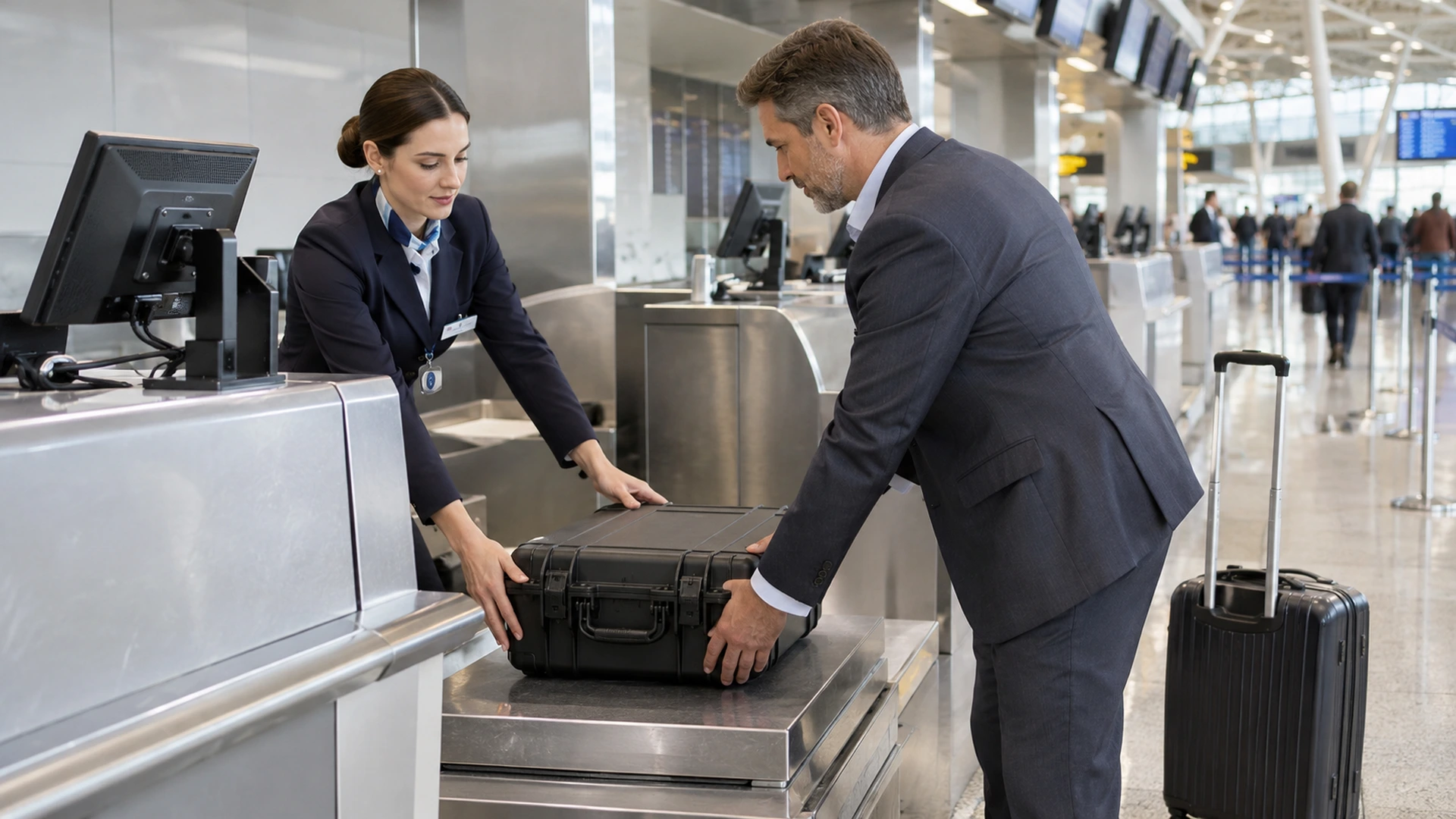
Business travel can involve more than a laptop. A colleague might carry samples, exhibition materials, specialised tools or presentation equipment. Check the airline's current size and weight allowances, prohibited items and any special handling requirements before selecting a fare.
A bag that qualifies as cabin baggage on one carrier may not meet another carrier's rules. An itinerary involving multiple airlines may have different conditions for different segments. If equipment is essential to a meeting, consider what the traveller would need if a checked bag were delayed, while following all applicable security and dangerous-goods rules.
Power banks, batteries and certain equipment can be subject to restrictions that depend on their specifications and the airline. Do not rely on a generic packing list for an unusual item. Consult the operating carrier's current instructions and, where necessary, request written clarification before travel.
If a checked bag must be collected and rechecked at a connection, account for the time needed as well as the allowance for each flight. Keep any baggage receipts with the booking documents and confirm that the purchased service appears on the relevant itinerary.
Coordinate travellers without assuming identical needs
For a team, first decide who must travel together and who can travel separately. A common itinerary can simplify coordination, but staff may be starting from different cities or have different commitments. One traveller may need an earlier return, while another must carry equipment or requires special assistance.
Confirm names and passenger details individually, following the booking provider's instructions and the travel documents each person will use. Errors can be difficult or expensive to correct, depending on the airline. Avoid assuming that one person's confirmation guarantees all passengers have been ticketed correctly.
Check the final group total and whether the fare conditions are the same for everyone. If travellers are booked separately, record the individual booking references and contact details securely. Establish who should be notified if an itinerary changes and who has authority to approve an additional cost.
Where a traveller needs assistance, ask what can be requested at booking and what must be arranged directly with the airline or airport. Allow time to confirm the request. The appropriate arrangements depend on the traveller's circumstances, the carrier and the facilities on the route.
Plan for changes before the day of travel
Every traveller should know where to find the itinerary, ticket confirmation, booking reference and support contact. The person who made the booking should also know whether they can make changes on the traveller's behalf and what information the provider requires.
If the airline changes a flight, review the entire trip before accepting an alternative. A later arrival may affect a meeting, hotel or onward booking. Ask which options are available under the applicable airline policy and ticket conditions, and whether an added service such as baggage will transfer to the new itinerary.
The booking agent, airline and insurer have different roles. SAA's contact information directs customers who purchased through an agent to that agent for refund applications. Other carriers and requests may have different processes. Keep the relevant contact details with the booking instead of assuming every issue can be resolved at the airport.
If the organisation has travel insurance, check the policy's definitions, exclusions, excess and notification requirements. Insurance does not automatically cover every missed meeting, missed connection or voluntary change. A written policy and a clear internal contact help the traveller know what to do when an incident occurs.
Put a simple approval and record process in place
A small business does not necessarily need complicated travel software to make better decisions. A shared checklist can capture the reason for travel, the proposed itinerary, the total expected cost and the person who approved it. It can also record the relevant fare restrictions and any outstanding document or assistance questions.
After purchase, verify that the ticket has been issued and that the itinerary and traveller details are correct. Record the payment and keep receipts in line with the organisation's accounting and privacy practices. Share only the information required by the people responsible for travel and support.
After the trip, review unexpected costs or problems. Were they caused by a change in plans, an unclear allowance, an overly short connection or an estimate that missed ground transport? Use the answer to improve the next booking, rather than judging the whole process only by whether the initial fare was low.
Choose for the work the trip must achieve
The best business-flight option balances the fare against the schedule, conditions and responsibilities of the journey. For a straightforward trip with fixed dates, a basic fare may be entirely suitable. A complex international journey or uncertain project schedule may justify a different choice.
Compare the real options for the people travelling, confirm the current rules and keep the details accessible. That approach makes it easier to control costs while giving the traveller a workable plan for getting to the meeting and responding if circumstances change.