

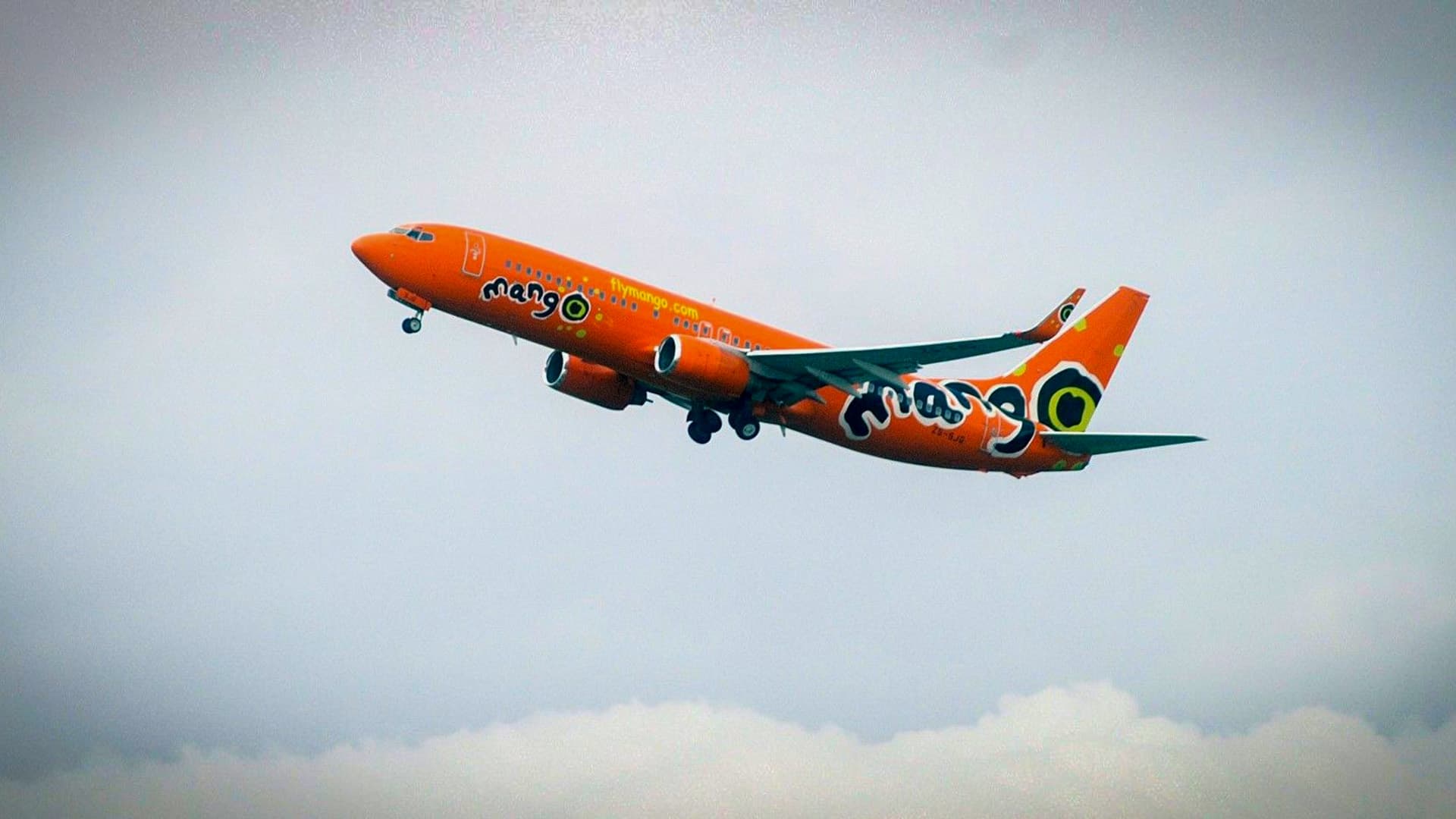
A Farewell to South Africa’s Sky-Orange Carrier
For over a decade, Mango Airlines painted the South African skies with its signature orange jets, democratizing air travel in a country where distance often dictates opportunity. With its recent closure, an era of affordable skies comes to an abrupt halt, leaving both nostalgia and uncertainty in its wake. The loss of Mango is not merely the disappearance of another airline; it is a seismic shift in the budget travel landscape that once enabled families, students, and small business owners to traverse the nation without financial ruin. This narrative explores the implications of Mango’s collapse, the turbulence now faced by domestic travelers, and what the horizon may hold for those seeking affordable alternatives.
The Rise and Resonance of Mango Airlines
Affordable Skies for Ordinary South Africans
Mango’s entry into the South African aviation scene in 2006 was nothing short of disruptive. Prior to its arrival, low-cost carriers were viewed with skepticism, often regarded as precarious ventures with fleeting lifespans. Mango, positioned itself differently by being a subsidiary of South African Airways, a connection that imbued it with both credibility and infrastructural support. For a middle-class family in Johannesburg longing to visit relatives in Cape Town, Mango tickets represented possibility rather than indulgence. The affordability created ripple effects, catalyzing tourism, domestic business trips, and an emerging culture of spontaneous travel that had previously been the preserve of the affluent.
Consider a university student in Durban booking a flight home for a long weekend. Prior to Mango, this might have required grueling bus rides or prohibitive ticket costs from legacy carriers. With Mango’s pricing, journeys once reserved for special occasions became routine. The carrier redefined the perception of mobility, much like the arrival of budget smartphones redefined communication access for millions. Through consistent branding, punctual service, and pricing models that rewarded early bookings, Mango etched itself into the South African travel psyche as the airline for the everyday citizen.
A Branding Icon in Orange
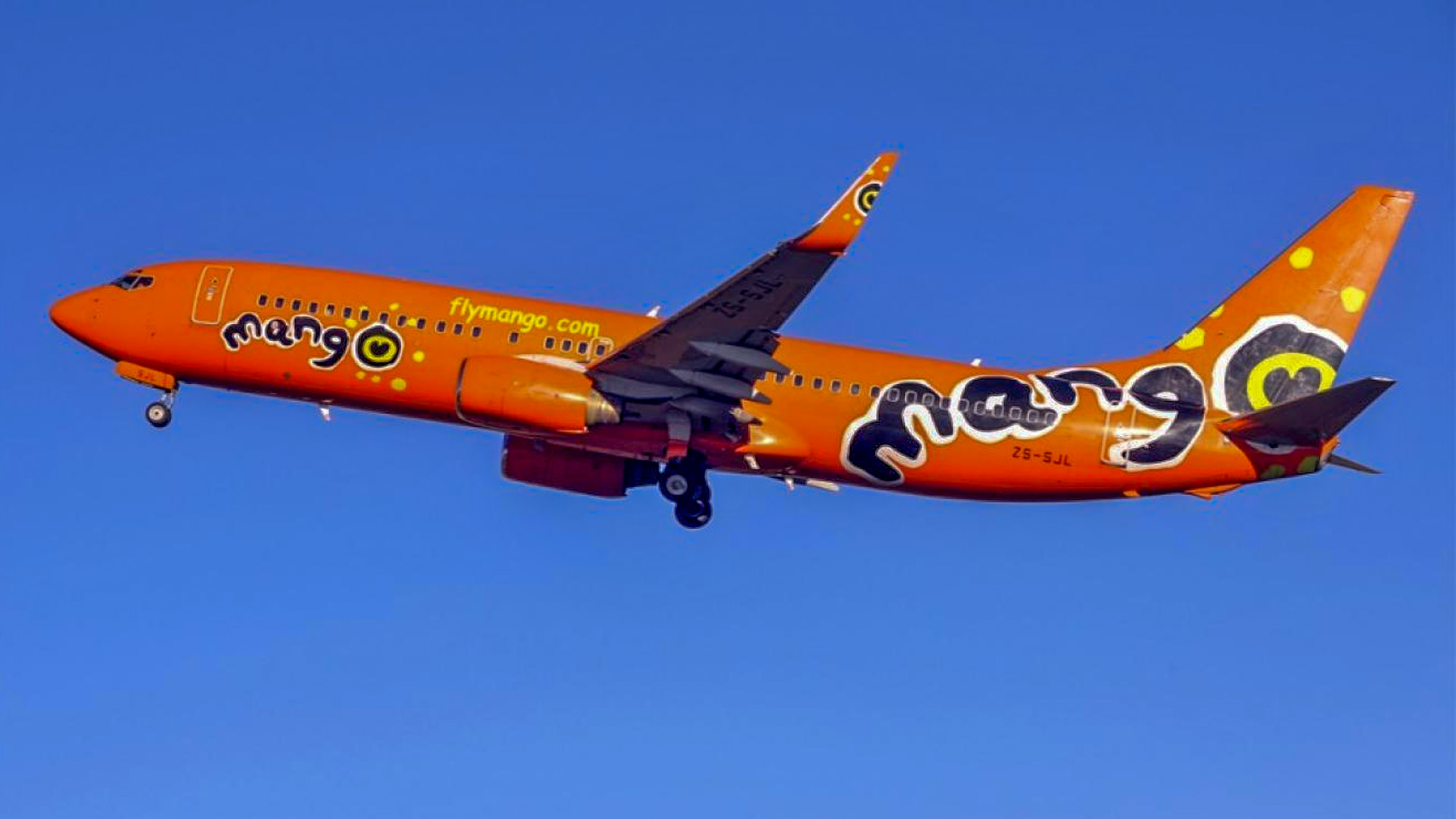
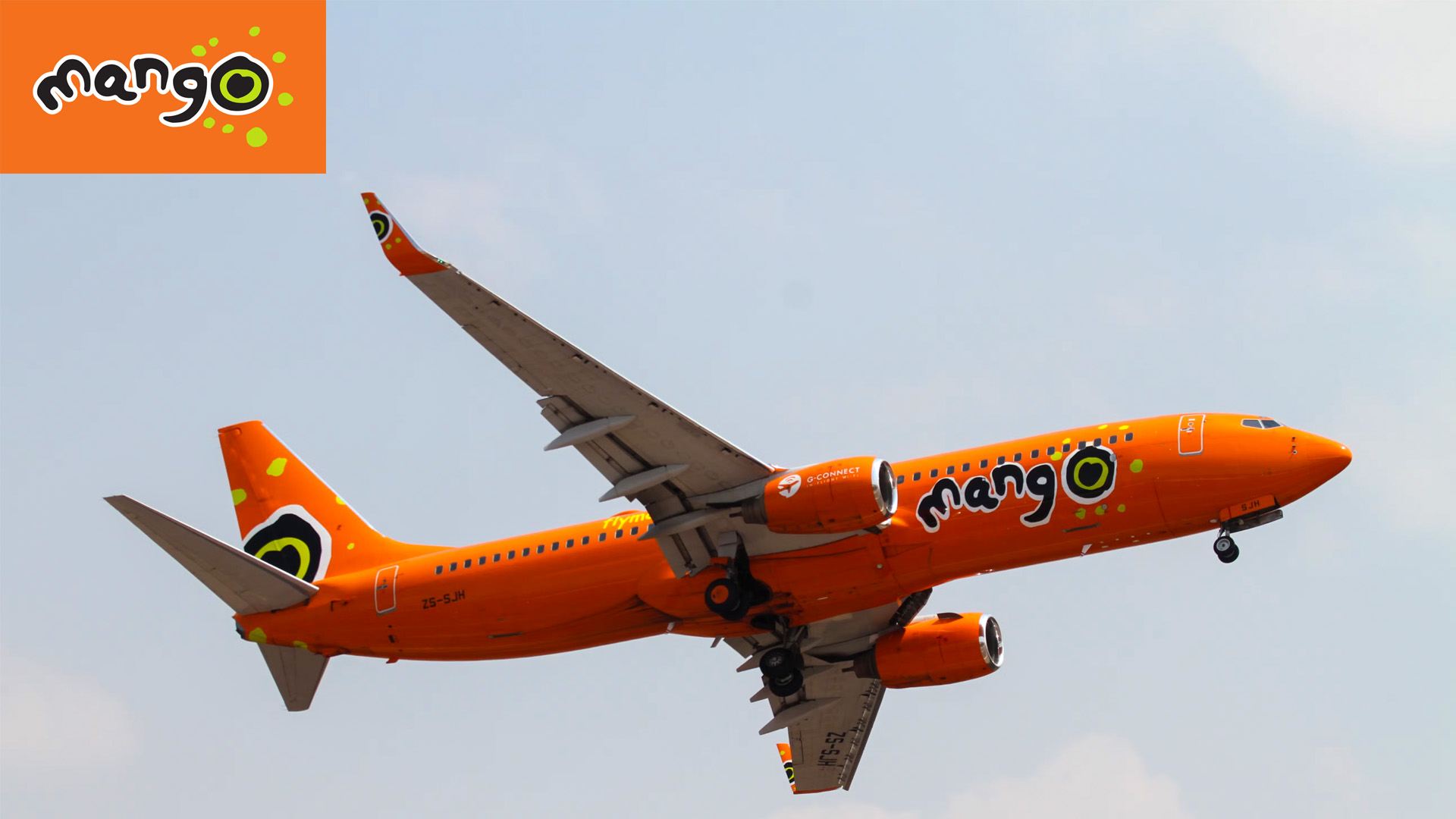
Mango’s striking orange livery wasn’t merely a design choice—it was a metaphor for visibility and accessibility. In a market dominated by more conservative branding, Mango chose vibrancy, ensuring its aircraft stood out not only in airports but also in the national consciousness. For many, the sight of an orange tailfin on a runway became synonymous with adventure and affordability. The branding was reinforced by playful advertising campaigns that leaned into humor, relatability, and an unmistakable South African flair. This deliberate strategy fostered emotional connections that far exceeded the transactional nature of booking tickets.
The airline also embraced digital innovation early on, pioneering online bookings and mobile check-ins in a market where many competitors lagged. By pairing a modern image with affordability, Mango cultivated loyalty across generational divides. Parents who once relied on costly carriers began introducing their children to Mango as a first-flight experience. For those travelers, Mango wasn’t just an airline—it was a trusted companion in journeys that marked graduations, job interviews, weddings, and funerals alike. The closure severs more than just routes; it disrupts traditions woven into South Africa’s travel fabric.
Operational Successes and Constraints
Behind the cheerful branding, Mango operated with lean efficiencies that allowed it to deliver consistently competitive fares. Its fleet of Boeing 737-800 aircraft, though not the newest on the market, offered reliability and manageable operating costs. The airline’s hub at O.R. Tambo International Airport granted it access to high-demand routes, ensuring steady passenger traffic. Mango frequently reported strong load factors, demonstrating that its value proposition resonated deeply with South Africans seeking practical travel options. For a time, the airline appeared to have cracked the elusive code of sustainability in low-cost aviation.
Mango was not immune to systemic vulnerabilities. Its dependency on state support through South African Airways became both a strength and a weakness. Operational bottlenecks, fluctuating fuel prices, and the volatility of a struggling parent company meant that Mango often fought financial headwinds beyond its control. Much like a sturdy boat tethered to a sinking ship, its survival was inevitably compromised. Even as passengers filled seats, behind the curtain financial cracks widened, ultimately culminating in the abrupt grounding that shocked loyal customers and industry observers alike.
The Closure and Its Reverberations
Grounded Dreams: The Final Days
The end of Mango Airlines unfolded not with a spectacular crash but with a silent withdrawal. Flights were canceled, passengers were stranded, and staff—many of whom had built their professional identities around the airline—found themselves displaced. For travelers who had booked family reunions or crucial business meetings, the closure was more than an inconvenience; it was a rupture of trust. Imagine purchasing a ticket to witness your sibling’s wedding, only to receive a cold email of cancellation days before departure. Such stories became the human collateral of corporate insolvency.
The uncertainty was compounded by a lack of clarity regarding refunds and future plans. Social media platforms filled with frustrated passengers demanding answers, while industry analysts dissected the structural causes of Mango’s demise. The government’s silence in the early stages only heightened anxieties, leaving many to conclude that Mango’s demise was inevitable. This disintegration mirrors the way a once-thriving orchard, neglected over seasons, eventually ceases to bear fruit—visible not in one dramatic moment, but in the slow withering of its roots.
Economic Fallout on Domestic Travel
For South Africa’s domestic aviation market, Mango’s closure is not merely the loss of an airline but the removal of a crucial stabilizer in ticket pricing. Low-cost carriers serve as competitive counterweights to full-service airlines, ensuring affordability remains within reach for average consumers. Without Mango’s presence, ticket prices on popular routes have already begun to rise, narrowing choices for students, workers, and families. Budget travelers now confront the stark reality of fewer options, often having to choose between expensive flights or arduous road trips.
The absence of Mango also reverberates into peripheral industries such as tourism, hospitality, and regional commerce. Hotels once bustling with domestic tourists now face quieter seasons, while small businesses dependent on the mobility of staff and clients feel an added financial squeeze. Consider a small clothing brand in Cape Town that frequently flew employees to Johannesburg for trade fairs. With Mango gone, travel costs double, eroding already slim profit margins. The void left by the orange carrier thus extends beyond airports into the broader veins of South Africa’s economic lifeblood.
Human Stories Behind the Headlines
Numbers and market graphs only partially capture the tragedy of Mango’s collapse. At its heart are the people whose livelihoods were tied to the airline. Flight attendants, pilots, ground staff, and call-center employees now face uncertain futures in a job market already strained by post-pandemic contractions. Many invested years honing their expertise, only to watch their skills devalued overnight. For them, the closure wasn’t a headline but a personal upheaval, akin to losing both a job and a professional family simultaneously.
Passengers, too, carry scars from the airline’s closure. Families who once associated Mango with cherished holidays or reunions now recall bitter cancellations and financial losses. The collective memory of Mango has shifted from joy to disillusionment. Yet, within these stories lies a broader truth: budget travel in South Africa is fragile, subject to the volatility of broader economic and political currents. Much like a trusted bridge collapsing without warning, Mango’s failure reveals the precarity of infrastructure many assumed to be unshakable.
The Future of Budget Travel in South Africa
Low-Cost Alternatives and Market Gaps
With Mango’s exit, travelers inevitably seek substitutes among remaining carriers such as FlySafair and Lift. These airlines now face the dual challenge of absorbing Mango’s customer base while maintaining operational efficiency. While competition can be healthy, the sudden absence of a major player creates risks of monopolistic pricing or service bottlenecks. Budget-conscious South Africans find themselves in a buyer’s paradox: grateful for alternatives, yet wary of dwindling choice. It is as though a vibrant marketplace suddenly lost half its stalls, forcing shoppers into long queues at the few remaining vendors.
The vacuum also invites potential new entrants. Regional entrepreneurs may view Mango’s demise as an opportunity to stake claims in underserved routes. Yet, starting an airline is not akin to launching a small business; it demands capital intensity, regulatory compliance, and resilience to global fuel and currency fluctuations. Unless carefully managed, attempts to fill Mango’s shoes may repeat the cycle of overpromise and collapse. The sustainability of budget airlines in South Africa thus hangs in a delicate balance, contingent upon foresight and financial prudence.
Technological Shifts in Aviation
Beyond traditional carriers, technological innovation could reshape the contours of budget travel. Advances in aircraft efficiency, digital booking ecosystems, and even electric aviation promise to lower operational costs over time. South Africa, must navigate infrastructural and policy hurdles before fully embracing such shifts. Imagine, for instance, a future where short-haul domestic flights operate on hybrid-electric planes, dramatically reducing fuel dependency and ticket prices. Such visions are not science fiction but emerging realities in other parts of the world, awaiting adoption on African soil.
Digital ecosystems also hold promise in redefining accessibility. Aggregator platforms, dynamic pricing algorithms, and AI-assisted travel planning could provide transparency and flexibility for consumers. Yet, without robust competition among carriers, technology alone cannot compensate for the structural void left by Mango. Much like having advanced smartphones without reliable networks, innovation needs a fertile environment to thrive. South Africa’s aviation regulators and policymakers must therefore act as gardeners, nurturing both innovation and healthy competition if budget travel is to regain its wings.
Policy Interventions and Consumer Protection
The collapse of Mango also underscores the necessity for stronger regulatory frameworks and consumer protection mechanisms. Stranded passengers and unresolved refunds highlight systemic gaps in accountability. Policymakers face the task of crafting safeguards that prevent sudden collapses from cascading into widespread economic and social damage. This could include mandatory financial disclosures from airlines, escrow mechanisms for ticket sales, or government-backed insurance schemes for consumers. Without such measures, the risk of history repeating itself remains high.
Equally important is the role of state oversight in balancing competition with sustainability. While state-owned carriers have historically faced criticism for inefficiency, complete laissez-faire risks monopolistic dominance that disadvantages consumers. A middle ground—where private innovation coexists with strategic public oversight—may provide the stability necessary for budget aviation to thrive. For the South African traveler, this would mean not only affordable skies but also the reassurance that those skies remain open and reliable, regardless of shifting economic tides.
The Future Of Budget Travel In South Africa