

Sustainable aviation fuel in 2026: what the supply gap means for air travel
Sustainable aviation fuel, commonly called SAF, is increasingly discussed when airlines explain their plans to reduce their climate impact. It is also frequently presented in a way that can leave travellers with more questions than answers. What is different about the fuel, how much is available, and does its use make a flight carbon-free?
The short answer is that SAF can reduce lifecycle emissions compared with conventional jet fuel, depending on how it is made and assessed. It does not eliminate emissions from a flight. Its availability remains limited, and expanding production involves challenges that go well beyond a passenger choosing a particular ticket.
In June 2026, the International Air Transport Association (IATA) estimated that global SAF production would reach about 2.4 million tonnes during the year, equivalent to approximately 0.8% of aviation fuel use. Those were forecasts, not final 2026 production figures. The estimate provides a useful starting point for understanding both the industry's ambitions and the scale of the work ahead.
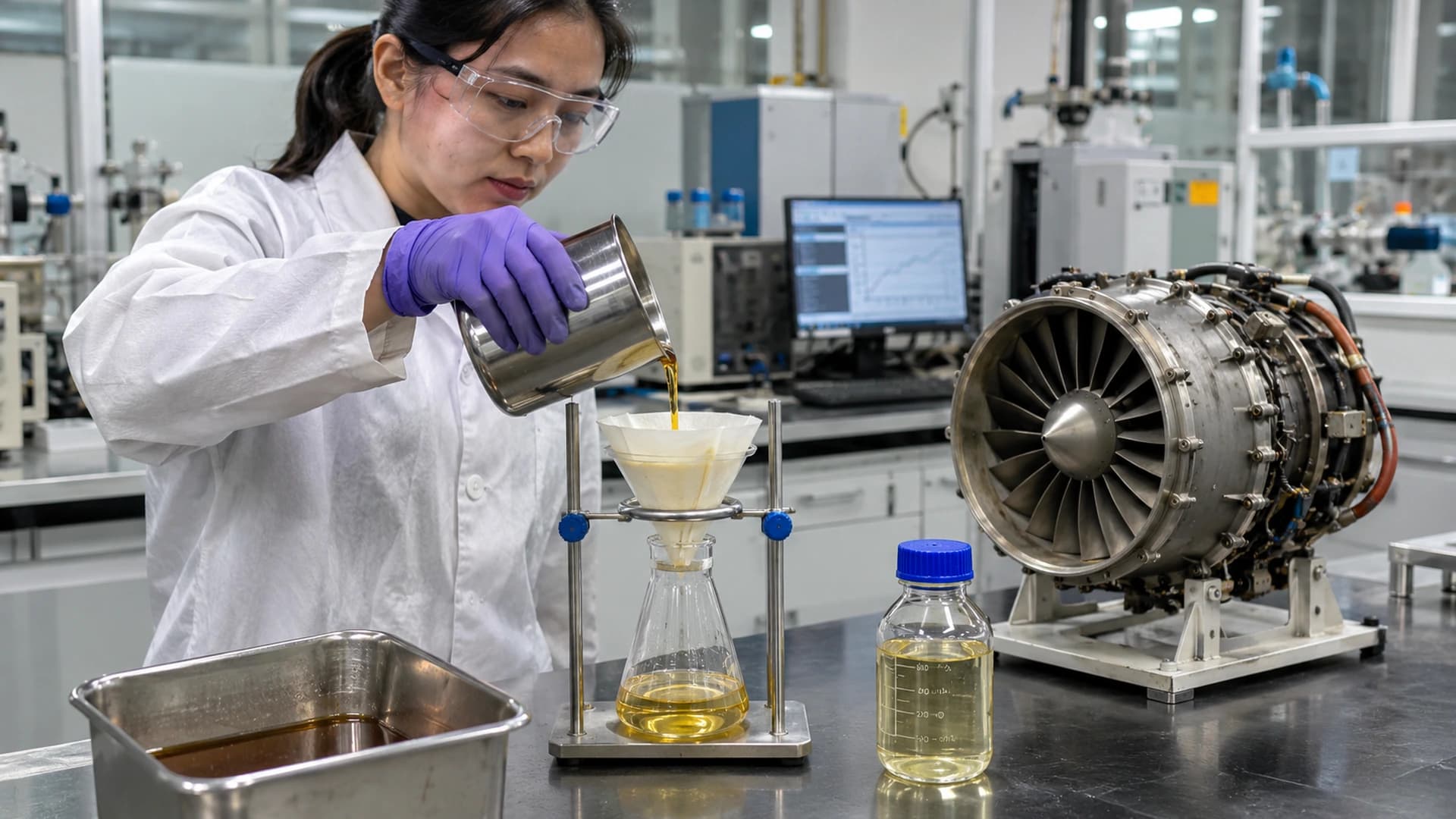
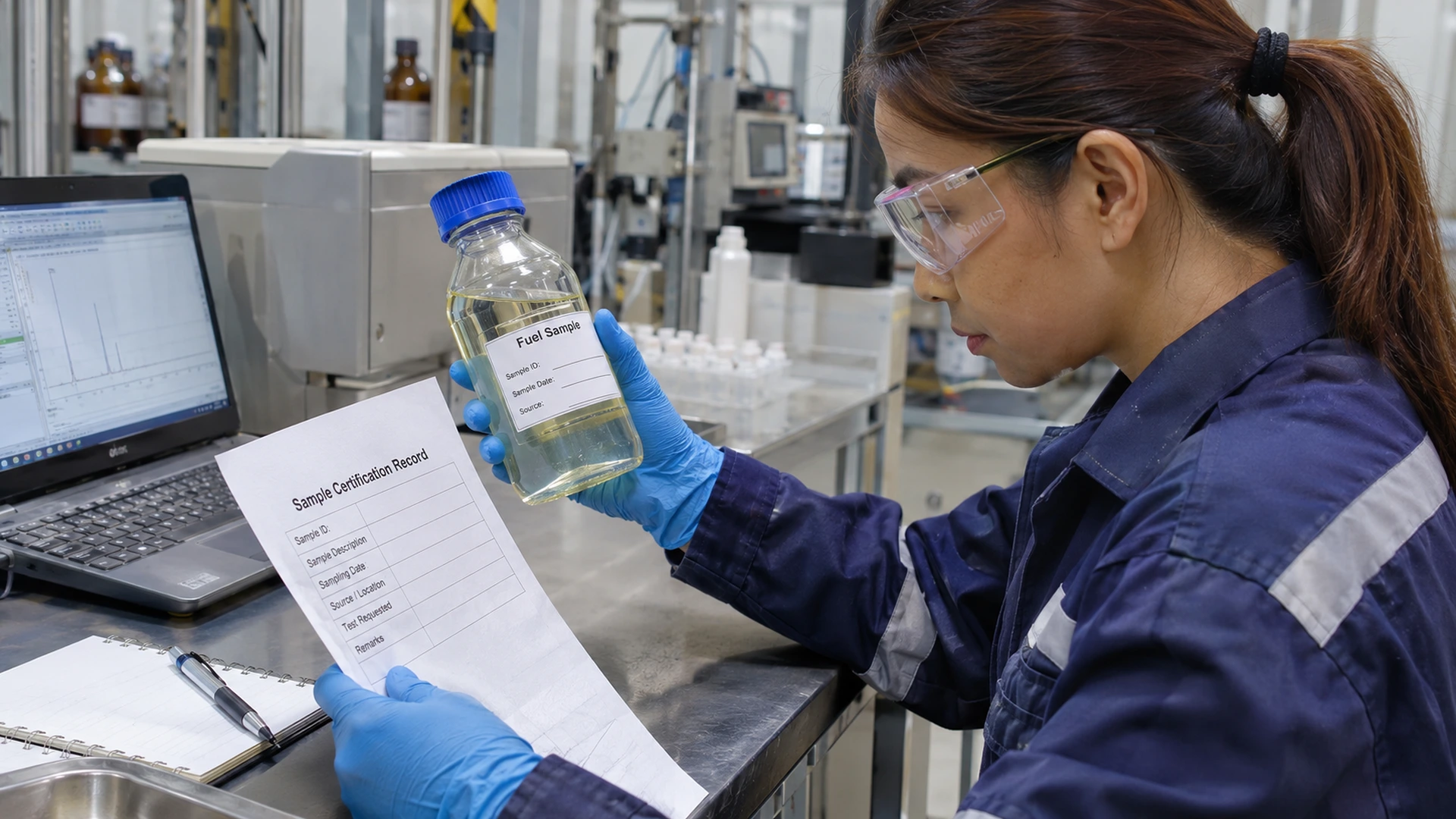
Images are AI-generated illustrations.
What is sustainable aviation fuel?
SAF is a category of aviation fuel made through approved processes using certain non-conventional inputs. Depending on the production pathway, those inputs can include waste oils, fats, residues or other eligible materials. Some developing pathways use captured carbon and hydrogen to produce synthetic fuels. The characteristics and sustainability of a particular fuel depend on its feedstock, production process and the relevant assessment framework.
The US Department of Energy's SAF overview describes renewable or waste-based fuel components intended for use with existing aviation equipment when they meet the relevant requirements. Approved fuel pathways must satisfy strict technical specifications. The details, including permitted blending conditions, depend on the fuel and applicable standards.
It is important to distinguish the idea of a fuel pathway from the fuel actually supplied on a particular flight. An airline may announce an agreement, a trial or a long-term ambition; these are different from evidence that a specific aircraft used a particular quantity on a specific date. Claims should identify their scope and the basis on which they are made.
SAF is not a single recipe, and a label alone cannot explain every environmental impact. Travellers and organisations evaluating a claim should look for information about the fuel's origin, certification, calculation method and the period covered.
Why lifecycle emissions matter
Aircraft release carbon dioxide when fuel is burned. The potential climate benefit discussed for SAF is usually based on lifecycle emissions: emissions associated with producing, transporting and using the fuel, compared with an appropriate conventional-fuel baseline. The result depends on the actual inputs, processes and accounting rules.
The International Civil Aviation Organization's lifecycle explanation identifies stages such as feedstock collection or cultivation, processing, transport, conversion and combustion. Different pathways can have different lifecycle results. A statement that a fuel reduces lifecycle emissions should not be converted into a claim that its use produces no emissions at the aircraft.
There are also wider sustainability questions, including how feedstocks are sourced and what other effects production may have. The answers are specific to the pathway and the criteria used. A claim based on one fuel or certification scheme should not automatically be applied to every product described as SAF.
For travellers, the distinction matters because terms such as “sustainable” and “lower carbon” can sound absolute. Ask whether the claim concerns lifecycle emissions, what comparison is used and whether it refers to a particular flight, an airline's overall fuel purchases or an accounting arrangement.
The 2026 supply estimate in context
In its June 2026 SAF production update, IATA forecast approximately 2.4 million tonnes of SAF for 2026, representing 0.8% of aviation fuel use. IATA's figures are industry estimates and expectations; final results may differ.
The association's SAF information page compares the 2026 expectation with estimated production of 1.0 million tonnes in 2024 and 1.9 million tonnes in 2025. Those figures indicate growth from a small base, alongside a substantial gap between current supply and the volumes contemplated in the industry's long-term scenarios.
IATA has set out an industry net-zero carbon goal for 2050 and describes SAF as a major potential contributor. That is an industry pathway, not evidence that the goal has already been achieved. The future share attributed to SAF depends on assumptions about production, technology, policy and other measures.
The reported global share also does not tell a passenger what percentage of fuel on an individual flight was SAF. Supply and use vary by location and carrier, and the way environmental attributes are recorded can differ from the physical movement of fuel. A route-specific claim needs its own evidence.
Capacity is not the same as production
A facility's potential capacity is the volume it could produce under stated conditions. Actual production is what it makes during a period. The two can differ because of demand, economics, feedstock access, operational decisions or other constraints.
IATA's June 2026 briefing presents estimated capacity alongside lower expected production. That distinction is useful when reading headlines about new facilities. A project announcement, planned capacity, an operating plant and verified delivered fuel are separate milestones.
Developing production takes investment, suitable inputs, technical approval and a route to customers. Production also competes for resources that may have other uses. The relative economics can change with energy prices, policy, financing costs and demand. None of those variables guarantees that a proposed facility will deliver its full capacity on a particular date.
For a prospective buyer of a flight, an airline's purchase agreement may signal demand for future supply. It should still be read carefully: note the dates, quantities, conditions and whether the agreement is binding or conditional where that information is available.
What certification can tell us
Certification and reporting frameworks are designed to provide rules for assessing eligible fuel and related claims. Under the international aviation emissions scheme known as CORSIA, ICAO's eligible-fuels guidance describes sustainability criteria, approved certification schemes and processes for monitoring, reporting and verification.
The existence of a certification framework is important, but it does not make every sustainability claim identical. A reader should understand which programme is being referenced, what a certificate covers and whether a reported figure concerns a physical fuel batch or an environmental attribute allocated through an accounting system.
A useful claim should state the period, quantity and scope. If an organisation reports an emissions reduction, it should be possible to understand the methodology and baseline. Avoid treating an undefined percentage as a guarantee that all emissions associated with a journey have been removed.
Travellers do not need to become fuel specialists to ask clear questions. They can look for a source explaining the calculation and ask the provider what a payment or reported figure represents. If the answer is unclear, it is reasonable to treat the claim cautiously rather than filling in the missing details.
What this could mean for South African aviation
South Africa is connected to international aviation networks and fuel markets, so changes in supply, standards and airline purchasing can become relevant to flights serving the country. The global figures alone do not establish how much SAF is produced or used in South Africa, which local airports have supply, or which individual routes receive it.
A local project should be assessed on its own published evidence. Useful details include the proposed feedstock, location, development stage, expected production, customers and certification arrangements. A feasibility study is not the same as a commissioned facility, and an announced target is not a verified operating result.
For airlines and suppliers, reliable supply and cost are practical considerations. For travellers, the more immediate questions remain whether the airline's specific statement is supported and whether an optional contribution has a clear explanation. A booking page may offer a carbon-related product, but its terms and underlying mechanism need to be examined individually.
It would be misleading to infer that every ticket from a South African airport includes SAF, or that a fare automatically purchases a particular quantity. Ask the airline or booking provider for the scope of any claim that matters to your decision.
Could SAF affect ticket prices?
Fuel is an important airline operating expense, but a ticket price reflects more than fuel alone. Route economics, competition, demand, aircraft use, airport charges, exchange rates and other costs can all influence a fare. A global SAF production estimate cannot predict the price of a particular flight.
Airlines may describe the cost of alternative fuels or environmental compliance as part of their wider cost environment. Whether and how such costs appear in a particular fare or separately disclosed charge depends on the carrier, route and applicable rules. Travellers should check the total price and the terms actually presented at booking.
If comparing two flights, avoid assigning an assumed environmental benefit or cost to either without evidence. Compare the itinerary, total price and ticket conditions, and examine any environmental information on its own terms. An optional contribution, if offered, should explain what is purchased, who receives payment and whether it is refundable.
A corporate travel team considering an environmental report should also check the boundary of the reported numbers. For example, determine whether a figure covers an airline’s entire operation, a specific period, or only an amount purchased on a customer’s behalf. Check whether the same reduction is being claimed by more than one organisation and ask what independent assurance applies. These questions do not establish the answer, but they help identify which claims can reasonably be compared.
What to watch next
Several developments will be relevant to the industry. One is verified production and delivery, rather than capacity announcements alone. Another is the availability of sustainable feedstocks and the ability to maintain credible certification as volumes grow. Airlines and producers must also address the economic gap between ambition and supply.
Government policy and international standards can influence investment and deployment. ICAO's 2026 policy guidance discusses a range of potential measures and the need to consider their costs, benefits and unintended consequences. It is guidance, not proof that a particular policy is in force in South Africa.
Travellers can look for updates from airlines, airports, producers and official bodies, paying attention to dates and the difference between an agreement and a completed delivery. For a company setting a travel policy, asking providers for clear, comparable evidence may be more useful than relying on broad environmental slogans.
Keeping the claim in proportion
SAF is an important industry development, but its present global share is small and its environmental performance depends on how it is made and assessed. IATA's 2026 estimate illustrates the distance between current supply and the scale discussed for future aviation goals.
For a traveller comparing flights, the responsible approach is to read sustainability statements alongside the fare, schedule and ticket rules, and to verify claims that affect the decision. Better information about fuel and emissions can support a more informed choice without suggesting that today's flight is emissions-free.