

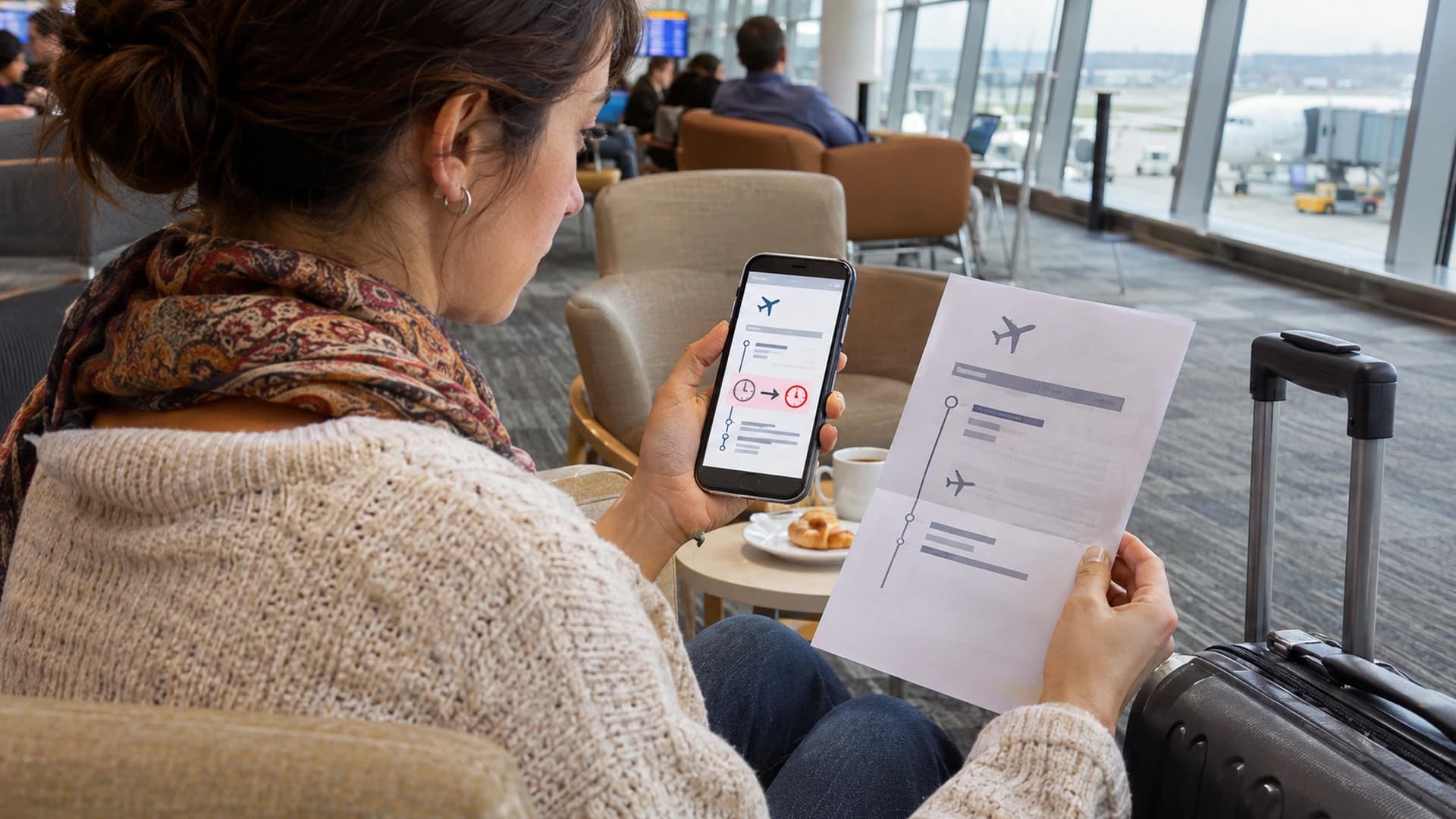
Your flight schedule has changed: what to check before accepting a new itinerary
A flight schedule change can be a minor adjustment or a serious disruption to the rest of your trip. A departure moved by an hour may still suit your plans, while a change of airport, an overnight connection or a cancelled flight may require a closer look.
The best first step is to establish exactly what has changed and which flights are affected. Then check the available options with the airline or booking provider before paying for a replacement. The correct response depends on the carrier, itinerary, ticket conditions, reason for the change and any passenger protections that apply to the journey.
This guide explains the practical questions to ask when your flight from, to or within South Africa is changed. It does not assume that every disruption leads to a refund or a particular amount of compensation.
Confirm that the message is genuine
An airline or booking provider may notify you by email, text message, telephone or an app. Before following an unexpected link, check the sender and compare the flight details with your records. Use the airline's official website or a contact method you already trust to verify the notice if you are unsure.
Scammers can use urgent travel messages to seek payment or personal information. Do not provide card details or identity documents simply because a message says your booking will be cancelled unless you act immediately. Contact the provider through an independently verified channel and ask whether the request is legitimate.
Find the current itinerary, booking reference, ticket number if available, passenger names and the contact details used when you booked. If several people are travelling, check whether the change affects the whole party. Save the original notice and the updated itinerary so you have a record of what was communicated.
A flight-status page and a booking-management page may show different kinds of information. Flight status can help confirm an operational delay or cancellation, while the booking record can show which alternative has been attached to your reservation. Ask the provider if the two do not appear to match.
Identify the type of change
A schedule change can be communicated well before travel; an operational delay may arise on the day. A flight can also be cancelled, diverted or replaced with another service. The terminology matters because the applicable process may differ.
Compare the original and revised details: departure and arrival dates, local times, airports, flight numbers, operating airlines and connection points. A flight leaving later may also arrive the next day. A change in a departure airport can affect ground transport even if the destination remains the same.
Check whether the airline has proposed an alternative or merely informed you that the original flight will not operate. A proposed itinerary is not necessarily suitable for your needs. Equally, do not assume that an alternative is confirmed until the provider explains its status and you receive the appropriate updated documents.
If a meeting, hotel, cruise or event depends on the original arrival time, assess that commitment separately. The flight provider may not control the conditions of another booking. Contact the relevant supplier before making assumptions about changes or refunds for those arrangements.
Look at the entire journey
A revised outbound flight may affect a connection, a return flight or the time available at your destination. Review every segment, even if the notice mentions only one. Confirm the time between flights and whether the departure is from the same airport and terminal.
For an international connection, check whether the change creates an overnight stay, requires an airport transfer or alters document requirements. Transit and entry rules depend on the traveller's nationality, documents, route and destination. Confirm current requirements with the relevant authorities and the operating airline.
If your flights are on separate tickets, contact each provider to understand your options. A change to the first ticket does not automatically change a separately booked onward journey. You may need to collect and recheck baggage, and the responsibility for a missed connection can depend on the booking arrangement and applicable conditions.
If the itinerary was bought as one ticket, ask how the proposed change affects the remaining flights and any purchased services. A single itinerary can simplify coordination, but it is still important to obtain confirmation of the specific alternative offered.
Who should you contact?
Start with the booking confirmation. It should identify the seller and the airline or airlines operating the flights. The appropriate contact can differ depending on whether you need immediate airport assistance, a rebooking, a refund or an insurance claim.
For example, South African Airways' customer-support page directs travellers whose bookings are affected by a disruption to contact it for assistance, and directs customers who purchased through a travel agent or online travel agent to that agent for refund applications. That is SAA's stated process for those requests, not a rule for every airline.
If you booked through an intermediary, ask it which actions it can handle and whether you also need to contact the operating carrier. If you are already at the airport, airline staff may be able to provide operational information, but the ticketing or refund process can still involve the original seller.
Use the channels listed on the official booking or airline website. Keep a note of whom you contacted, the date and the reference for the conversation. If you cannot get through and departure is near, follow the current instructions provided by the airline while retaining evidence of your attempts to contact the relevant provider.
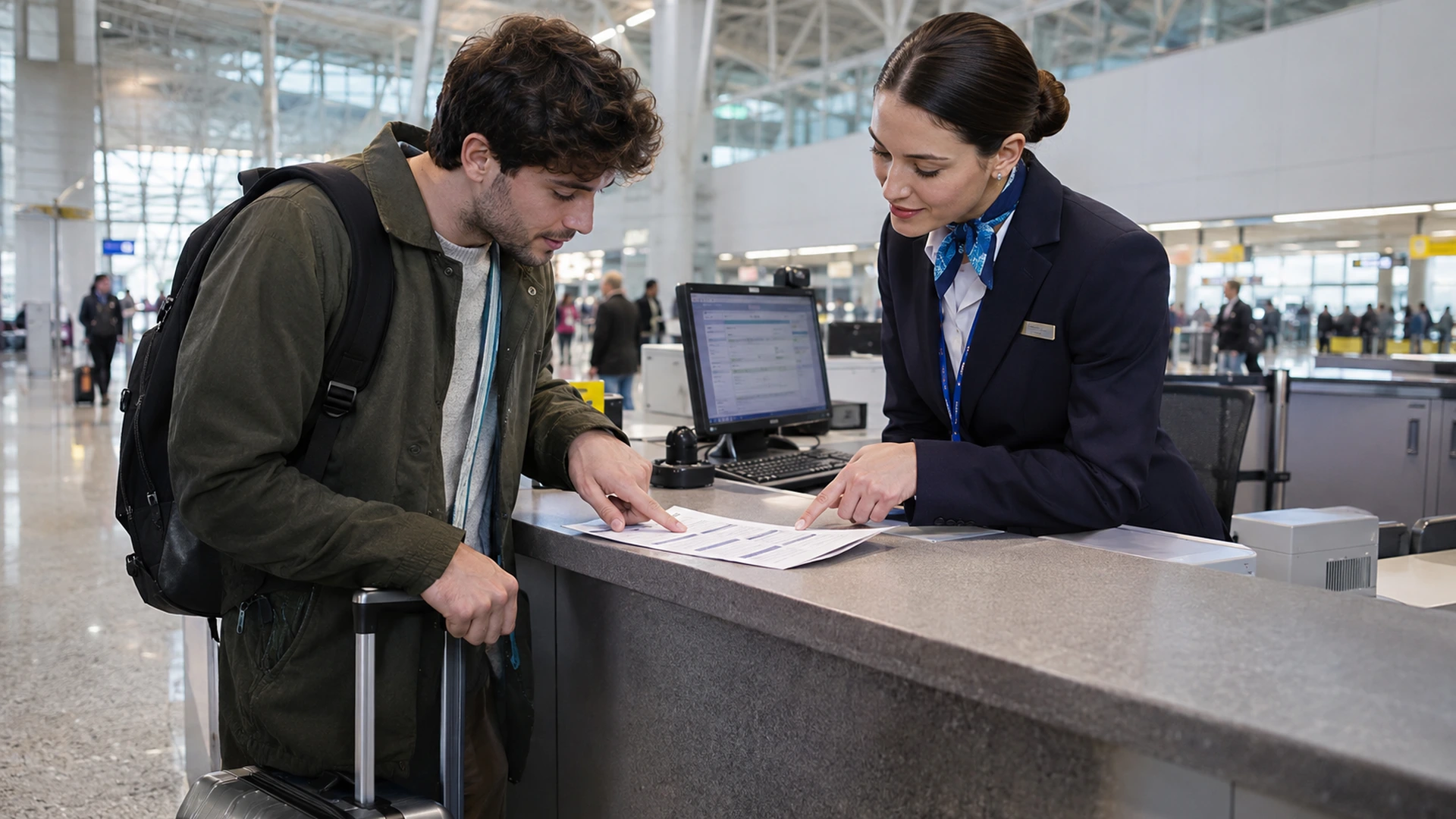
Compare the proposed alternative with your needs
An alternative flight may arrive earlier or later, add a stop or change the airport. Before accepting it, check whether all travellers have seats and whether the journey still meets your essential commitments. Confirm the connection, baggage arrangements and any special-assistance requests.
Ask whether the alternative is already confirmed or is only a proposal. If you purchased seats, additional baggage or another service, ask whether those purchases carry over and what happens if the same service is unavailable on the revised itinerary. Request an updated confirmation once the arrangement is final.
If the alternative does not work, explain the constraint clearly. For example, a traveller may need to arrive before a specific time for a meeting or cannot manage an overnight connection. Ask what other flights or remedies are available under the applicable policy. Availability can change and options are not necessarily identical for every passenger.
Avoid accepting an itinerary merely because it is the first one shown if you have not understood its consequences. At the same time, do not ignore a time-sensitive request. Ask the provider for any deadline and for written confirmation of your options before it expires.
Ask about a refund, credit or rebooking
Depending on the circumstances, the airline's policy and applicable law, an available remedy may involve a different flight, a refund or a credit. The conditions can differ when an airline changes a flight from those that apply when a traveller voluntarily decides to cancel.
Ask whether the proposed refund covers the whole ticket or only an unused portion, how separately purchased services are treated, the form of refund and the process for requesting it. If credit is offered, ask about expiry, eligible passengers and flights, restrictions and what happens if the replacement costs more or less.
A refund and compensation are different concepts. A refund concerns money paid for an eligible ticket or service. Compensation, where applicable, depends on the relevant rules and circumstances. A delay or cancellation does not automatically create the same entitlement on every route.
The European Commission's passenger-rights information describes protections that can apply to certain flights under European rules. Eligibility depends on the flight, carrier, circumstances and rules in force. It should not be treated as a universal South African entitlement. Check the appropriate official guidance for the exact journey.
Be careful with replacement purchases
Buying a new flight immediately can feel like the fastest solution, especially if the trip is important. Before doing so, ask the airline or provider what it can offer and whether it will authorise or reimburse an independently purchased replacement. Obtain the answer in writing where possible.
The price of a new ticket can change quickly, and waiting may involve its own risk. The right decision depends on the urgency of the journey, the options available and your ability to absorb a cost that may not be reimbursed. If you decide to purchase independently, keep the original notice, communications and receipts.
Check whether cancelling or replacing one part of your itinerary affects later segments on the original ticket. Ask the provider to explain the status of the return journey and any connecting flights. A second booking can create duplicated travel or conflicting reservations if the first itinerary remains active.
The same caution applies to hotels and ground transport. Before changing a booking, check its own conditions and whether the airline or insurance policy offers assistance in the circumstances. A receipt is useful evidence, but retaining one does not guarantee reimbursement.
Keep evidence and check insurance
Save the original and revised itineraries, the disruption notice, relevant receipts and written responses. If a flight is delayed or cancelled at the airport, ask the airline how to obtain confirmation of the event and its stated reason. Record the actual travel arrangements and any expenses you incur.
If you have travel insurance, read the policy wording and contact the insurer according to its instructions. Policies differ in their coverage, exclusions, excesses, evidence requirements and deadlines. A policy may treat a delayed flight, a missed connection, a cancelled event and a voluntary change differently.
Do not assume that purchasing insurance guarantees payment for every disruption or for the full cost of a replacement. Ask the insurer which documents it needs and whether approval is required before arranging accommodation or transport. The airline, booking provider and insurer each assess different aspects of the situation.
If you are travelling for work, notify the person responsible for travel and agree on who will speak to the provider or approve additional expenses. For a family or group, make sure each traveller's status is clear and avoid creating separate changes without checking the effect on the rest of the booking.
Prepare for the revised trip
Once an alternative is confirmed, review the new ticket and itinerary. Check passenger names, travel dates, local times, airports, operating airlines and connection details. Confirm baggage, seat selections and assistance arrangements, and update the people expecting you at your destination.
Recheck travel documents and any transit requirements if the route or travel date has changed. Monitor the airline's current flight information before leaving for the airport, and ensure your contact details remain accurate. Keep the updated confirmation accessible along with the original correspondence.
A disruption is easier to manage when you know what changed, who can help and what each option means for the whole trip. Take the time available to verify the details, preserve your records and choose the arrangement that meets your needs.